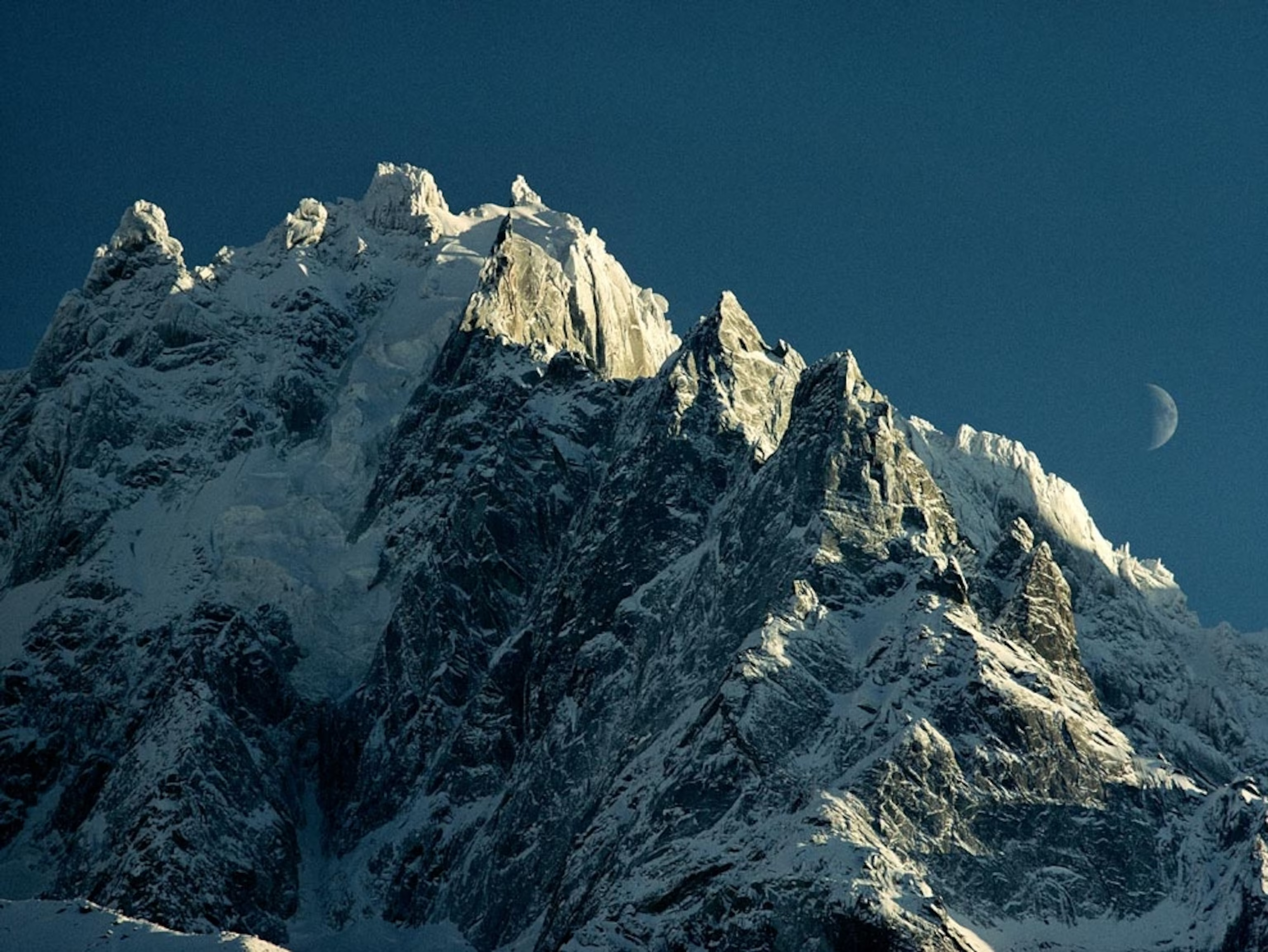
I’ve always had a soft spot for mountains. Growing up near the foothills in my hometown, I’d sneak off on weekends with a backpack and a sense of adventure, chasing sunrises over jagged peaks. There’s something about their quiet majesty that pulls you in, reminding you how small we are in this vast world. When I think of the most beautiful mountains, it’s not just about height or fame—it’s the way they carve the sky, the stories they hold, and the sheer awe they inspire. In this guide, we’ll explore 30 of the planet’s stunners, from snow-capped icons to hidden gems that make you stop and stare. Whether you’re a hiker dreaming of trails or just scrolling for inspiration, these peaks deliver that wow factor every time.
What Makes a Mountain Beautiful?
Beauty in mountains isn’t a checklist—it’s a feeling. Think dramatic shapes like perfect pyramids or rugged cliffs that catch the light just right, surrounded by crystal lakes or wild forests. Cultural ties add depth too, like sacred sites where locals have prayed for centuries.
Factors like symmetry, isolation, and seasonal changes play a role. A mountain blanketed in autumn colors hits differently than one under fresh snow. And don’t forget accessibility—some beauties reward the trek, while others shine from afar.
Personal connection seals it. I once stood at a viewpoint, wind whipping my face, realizing beauty lies in that shared moment with nature.
Top Continents for Stunning Peaks
Mountains span the globe, but some regions steal the show. Asia boasts Himalayan giants with spiritual vibes, while South America’s Andes offer raw, untamed drama. Europe’s Alps mix charm with challenge, perfect for scenic drives or hikes.
North America delivers variety—from Alaska’s icy behemoths to Colorado’s colorful ranges. Africa and Oceania add unique twists, like volcanic wonders or island escarpments.
Antarctica’s remote peaks remind us of untouched wilderness. Each continent’s mountains tell a story shaped by geology and time.
The 30 Most Beautiful Mountains
Diving into our list, I’ve drawn from traveler tales, expert polls, and my own wanderings. These aren’t ranked by height but by that indefinable allure—the kind that makes you book a ticket. We’ll cover why they’re special, how to experience them, and tips for your visit.
1. Matterhorn, Switzerland/Italy
This iconic pyramid rises sharply against the Alps, its four steep faces creating a silhouette that’s instantly recognizable. Often called the “Mountain of Mountains,” it draws climbers and photographers year-round. I remember my first glimpse from Zermatt—heart-stopping, like nature’s own Toblerone bar come to life.
At 4,478 meters, it’s not the tallest but feels monumental. Hike the trails around it for views, or take the Gornergrat Railway for easy access. Best in summer for wildflowers, though winter skiing adds magic.
Visiting? Pack layers—the weather flips fast. And hey, if you’re not climbing, the chocolate in town is a sweet consolation.
2. Ama Dablam, Nepal
Known as the “Matterhorn of the Himalayas,” this peak’s elegant ridges and fluted faces glow at sunset. Towering over the Everest trail, it’s a climber’s dream but stunning from base camps too. On my trek to Everest Base Camp, it loomed like a guardian, stealing the show every dawn.
At 6,812 meters, its beauty lies in sharp contrasts—ice against rock, sky against snow. Join a guided trek for safe views, or photograph from Pangboche village.
Pro tip: Acclimatize slowly to avoid altitude woes. It’s humbling, reminding you mountains demand respect.
3. Alpamayo, Peru
Often voted the world’s most beautiful, this fluted ice pyramid in the Cordillera Blanca mesmerizes with its near-perfect form. Surrounded by turquoise lakes, it’s a mountaineer’s holy grail. I haven’t summited, but gazing from afar felt like witnessing art sculpted by wind and time.
Rising to 5,947 meters, its southwest face is a sheer wonder. Access via Huaraz for hikes, or book expeditions with local guides.
Beware avalanches—safety first. The Andean culture around it adds warmth to the chill.
4. Mount Fuji, Japan
Japan’s sacred volcano boasts symmetrical slopes that inspire artists and pilgrims alike. Snow-capped much of the year, it reflects in lakes like a mirror of serenity. Climbing it during my cherry blossom trip was spiritual—crowded, sure, but the summit sunrise? Pure poetry.
At 3,776 meters, it’s climbable in a day for fit folks. Official season is July-August; off-season views from Hakone are quieter.
Don’t underestimate the crowds—start early. And sample fuji-inspired sake afterward for that cultural kick.
5. Denali, Alaska, USA
North America’s tallest at 6,190 meters, this massive peak dominates the landscape with glaciers and wild tundra. Its isolation amplifies the grandeur, like a lone sentinel in the wilderness. Flying over it once, I felt tiny—nature’s way of putting ego in check.
View from Denali National Park roads or hikes; climbing requires serious prep. Summer brings midnight sun for epic photos.
Wildlife abounds—bears and moose add thrill. Pack bear spray and embrace the adventure.
6. Kirkjufell, Iceland
This arrowhead-shaped hill on the Snæfellsnes Peninsula stands out with waterfalls cascading nearby. At just 463 meters, its beauty is in the drama—especially under northern lights. Hiking around it in Iceland’s fickle weather was exhilarating, rain and all.
Photograph from Grundarfjörður for that Game of Thrones vibe. Year-round access, but winter auroras elevate it.
Slippery paths—good boots essential. Iceland’s magic makes every view postcard-worthy.
7. Mount Assiniboine, Canada
Dubbed the “Matterhorn of the Rockies,” its pyramidal form rises amid turquoise lakes in Banff. At 3,618 meters, it’s a hiker’s paradise with meadows bursting in summer. Camping there, stars overhead, felt like stepping into a painting—peaceful yet powerful.
Heli-hike in or trek from Sunshine Village. Multi-day trips reward with solitude.
Bears roam—store food properly. The Canadian Rockies’ charm is unbeatable.
8. Cuernos del Paine, Chile
These horn-like granite towers in Torres del Paine pierce the sky at 2,600 meters. Wind-sculpted and dramatic, they frame Patagonia’s wild beauty. My trek through gusty winds was tough, but the views? Worth every blister.
Base camp at Torres for day hikes; full W-circuit for immersion.
Weather unpredictable—gear up. Patagonia’s raw edge builds character.
9. Mount Thor, Canada
Boasting the world’s tallest vertical drop at 1,250 meters, this Baffin Island cliff is sheer intimidation. At 1,675 meters total, its granite face draws extreme climbers. Viewing from afar via boat tours, I marveled at its scale—nature’s dare.
Access remote; fly to Pangnirtung then hike. Summer for milder conditions.
Respect the Arctic—cold bites. It’s a testament to geological wonders.
10. Half Dome, USA
Yosemite’s granite icon at 2,695 meters rises like a sliced apple, overlooking valleys. The cable route to the top is thrilling—my hands shook, but the panorama? Unforgettable joy.
Permit required for summit; hike early to beat crowds. Spring waterfalls enhance beauty.
Slippery when wet—harness up. Yosemite’s spirit lingers long after.
11. Ulvetanna Peak, Antarctica
This fang-like spire in Queen Maud Land at 2,931 meters epitomizes remote beauty. Ice fields surround its sharp edges, a climber’s ultimate challenge. Haven’t been, but stories of Antarctic expeditions fuel my dreams—harsh yet hypnotic.
Expedition cruises offer glimpses; climbing needs expertise.
Extreme cold—prep thoroughly. Antarctica’s purity is profound.
12. Mount Asgard, Canada
Twin flat-topped peaks on Baffin at 2,015 meters evoke Norse myths. Cylindrical and imposing, they’re base-jumping hotspots. Imagining the drop gives me chills—beautiful in their oddity.
Remote access via ski or heli; summer for trekking.
Wild and untouched—leave no trace. Adventure at its purest.
13. Tre Cime di Lavaredo, Italy
These three battlement-like peaks in the Dolomites at 2,999 meters offer jagged elegance. Hiking the loop, war history echoes in the rocks—poignant and pretty.
Summer for via ferrata; refugios provide rest.
Crowded paths—go off-peak. Italian Alps’ allure is timeless.
14. Fitz Roy, Argentina
Patagonia’s granite spire at 3,405 meters demands respect with its sheer faces. Sunrise turns it pink—magic I witnessed after a rainy hike, rewarding patience.
El Chaltén base for treks; guided for safety.
Windy—anchor tents. South America’s spirit shines here.
15. Eiger, Switzerland
The “Ogre” at 3,967 meters looms with its notorious north face. Jungfrau region’s drama unfolds in trains and trails. Riding the Jungfraubahn up, views unfolded like a storybook—intimidating yet inviting.
Cable cars for easy access; climbers tackle walls.
Avalanche risk—check forecasts. Swiss precision meets natural wonder.
16. Grand Teton, USA
Wyoming’s sharp peak at 4,199 meters rises abruptly from plains. Lakes reflect its grandeur perfectly. Kayaking Jackson Lake, I felt connected—wildlife and wilderness in harmony.
National park hikes vary; permits for backcountry.
Bears present—hike noisy. Tetons’ accessibility is a gift.
17. Mount Rainier, USA
Washington’s volcano at 4,392 meters gleams with glaciers. Wildflower meadows in summer burst with color. Summiting was grueling, but the ice caves? Surreal beauty.
Paradise area for day trips; climbing with guides.
Crevasse danger—rope up. Pacific Northwest’s icon inspires.
18. Table Mountain, South Africa
Flat-topped at 1,085 meters, it overlooks Cape Town like a natural table. Cable car rides offer panoramic city-ocean views. Sunset up there with wine—romantic and relaxed, unlike my usual scrambles.
Hike Platteklip Gorge for sweat; aerial cableway for ease.
Fog rolls in fast—monitor weather. Africa’s urban gem.
19. Mount Cook (Aoraki), New Zealand
Kiwi’s highest at 3,724 meters, “Cloud Piercer” dominates with icy ridges. Hooker Valley track is easy yet stunning—mirrors in lakes double the delight.
Fly-in for glaciers; hikes from Mount Cook Village.
Earthquakes shift landscapes—stay alert. Middle Earth’s real star.
20. Khan Tengri, Kyrgyzstan
This marble pyramid at 7,010 meters glows red at sunset in the Tian Shan. Nomadic culture adds mystique. Tales of Silk Road treks draw me—remote and radiant.
Base camps via helicopter; climbing technical.
High altitude—acclimatize. Central Asia’s hidden treasure.
21. Machapuchare, Nepal
“Fishtail” at 6,993 meters is sacred, unclimbed. Annapurna views are ethereal. Trekking base, prayer flags fluttering—spiritual high without the summit.
Pokhara start for trails; teahouses along way.
Monsoon avoids—clear skies best. Nepal’s untouched beauty.
22. Cerro Torre, Argentina/Chile
Patagonia’s needle at 3,128 meters, ice-capped and controversial. Wind howls around its form—daunting yet dazzling.
Los Glaciares Park for approaches; expert guides needed.
Ice tools essential. Border-straddling wonder.
23. Stetind, Norway
Norway’s national mountain at 1,392 meters juts like an anvil from fjords. Coastal hikes offer sea-mountain fusion. Summer midnight sun climbs—otherworldly light.
Ferry to access; scramble routes vary.
Slippery rock—helmets on. Scandinavian simplicity stuns.
24. Maroon Bells, USA
Colorado twins at 4,315 meters reflect in lakes with maroon hues. Aspen forests frame them perfectly. Fall colors hike—leaves crunching, air crisp—pure bliss.
Permit for access; shuttle in peak season.
Crowds peak—early birds win. Rockies’ photogenic pair.
25. Mont Blanc, France/Italy
Europe’s highest at 4,808 meters, snowy dome beckons. Chamonix vibes with alpine charm. Cable car to Aiguille du Midi—views that drop jaws.
Multi-country traverses; huts for overnights.
Altitude sickness—pace yourself. Continental crown jewel.
26. Kilimanjaro, Tanzania
Africa’s roof at 5,895 meters, free-standing volcano with ecosystems galore. Summit sunrise over clouds—emotional peak for many, including me after days of toil.
Guided climbs mandatory; porters carry loads.
Malaria zone—meds needed. Equatorial snow surprises.
27. Aconcagua, Argentina
Andes’ sentinel at 6,961 meters, visible from afar. Non-technical but high—my attempt taught humility in thin air.
Mendoza base; permits required.
Dust storms—goggles help. Western Hemisphere’s pride.
28. K2, Pakistan/China
Savage at 8,611 meters, pyramid of rock and ice. Karakoram’s gem demands utmost skill. Stories of its ferocity awe me—beauty in brutality.
Baltoro Glacier trek for views; climbing elite.
Avalanches common—experience vital. Himalayan heavyweight.
29. Everest, Nepal/China
World’s tallest at 8,848 meters, but beauty in its mass and mystique. Base camp treks reveal flanks—sherpa hospitality warms the cold.
Flights to Lukla; acclimatization hikes.
Crowds at base—book ahead. Ultimate bucket-list beauty.
30. Dolomites’ Tre Cime di Lavaredo (Revisited for Emphasis)
These Italian towers embody Dolomite drama. At 2,999 meters, their vertical walls glow at dusk. Circling them on foot—history of WWI trenches adds layers.
Sexten area lodges; loop trail moderate.
Rockfall risk—stay on paths. European elegance endures.
Comparison: Iconic Peaks vs. Hidden Gems
Famous ones like Everest draw crowds for their prestige, while lesser-knowns like Ulvetanna offer solitude. Icons have better infrastructure—trails, guides—but hidden spots require more planning and reward with exclusivity.
Height doesn’t equal beauty; Kirkjufell’s modest stature packs visual punch over some giants. Accessibility varies—cable cars for Matterhorn views vs. expeditions for Antarctic peaks.
Cultural significance tips scales: Fuji’s sacred status adds depth beyond aesthetics.
| Mountain | Height (m) | Location | Accessibility | Unique Feature |
|---|---|---|---|---|
| Matterhorn | 4478 | Switzerland/Italy | High (trains, hikes) | Pyramidal shape |
| Ama Dablam | 6812 | Nepal | Medium (treks) | Fluted ridges |
| Alpamayo | 5947 | Peru | Low (expeditions) | Ice pyramid |
| Mount Fuji | 3776 | Japan | High (climbs) | Symmetry |
| Denali | 6190 | USA | Medium (park access) | Isolation |
Pros and Cons of Visiting Beautiful Mountains
Pros include breathtaking views that recharge the soul, physical challenges building resilience, and cultural immersions enriching travel. Wildlife encounters add excitement, and photography opportunities are endless.
Cons? Weather can ruin plans—storms or fog obscure sights. Altitude sickness hits hard, crowds overwhelm popular spots, and costs mount with gear or guides.
Environmental impact weighs heavy—tread lightly to preserve these wonders.
People Also Ask
What is considered the most beautiful mountain in the world?
Many crown Alpamayo in Peru for its perfect icy form, but it’s subjective—Matterhorn or Ama Dablam often tie based on polls.
What is the most beautiful mountain range?
The Alps edge out with iconic peaks and lakes, though the Rockies or Himalayas argue strongly for their diversity.
What is the prettiest mountain ever?
Ama Dablam’s elegant lines win hearts, especially at sunset over Nepal’s valleys.
Where are the nicest mountains in the world?
Patagonia for drama, Switzerland for charm, and Nepal for spiritual heights top lists.
Where to Get Guided Tours for These Mountains
For Everest or Kilimanjaro, operators like REI Adventures or local firms in Kathmandu/Tanzania provide expert guides. Book via Intrepid Travel for sustainable options.
In the Alps, Chamonix-based companies offer Mont Blanc ascents—check Alpine Guides.
Patagonia? Cascada Expediciones handles Torres del Paine with eco-focus.
Best Tools for Mountain Photography and Planning
Apps like AllTrails map hikes; PeakFinder AR identifies peaks. For photos, tripods like Manfrotto stabilize shots, while drones (where allowed) capture aerials—DJI Mini series is lightweight.
Weather apps: Mountain Forecast for precise predictions. Gear up with REI or Patagonia for durable packs.
FAQ
How do I choose which beautiful mountain to visit first?
Start with accessibility and your fitness level—Fuji for beginners, Everest treks for the adventurous. Consider seasons for optimal views.
Are these mountains safe to climb?
Many require guides and prep; avalanches, altitude, and weather pose risks. Always check local advisories.
What gear do I need for mountain trips?
Essentials: sturdy boots, layers, water purifier, first-aid kit. For heights, harnesses or crampons if climbing.
How can I visit sustainably?
Follow Leave No Trace, support local economies, and choose low-impact tours to minimize footprint.
What’s the best time to see these mountains?
Summer for Europe/USA, dry seasons for Himalayas/Andes—research per peak for clear skies and fewer crowds.
Mountains have a way of staying with you. Whether it’s the thrill of a summit or a quiet viewpoint moment, these 30 beauties invite exploration. Plan your trip, lace up those boots, and let the peaks work their magic. Safe travels—may your adventures be as stunning as the views.
Leave a Reply